
How to Choose the Right ABA Therapy Center for Your Child
After a child is diagnosed with autism or Down syndrome, one of the most common phrases parents search is “ABA center in Woburn”. But choosing the right provider takes more than proximity, because not every center is built the same, and the differences matter far more than a website can show. Understanding how to choose the right ABA therapy center for your child before you make that first call can save you weeks of uncertainty and help you feel confident the moment you walk through the door. This guide covers exactly what informed parents in the Woburn, Winchester, Burlington, Stoneham, Wilmington, Arlington, Andover and Lexington areas ask when choosing the right ABA therapy center for their child.
Choosing the right ABA therapy center is one of the most important decisions you’ll make for your child’s early development.
1. A Genuine Play-Based, Child-Led Approach
ABA therapy has evolved significantly. The best centers today don’t run rigid, drill-style sessions — they meet each child where they are, using play and natural routines as the vehicle for learning. At First Steps Developmental Services, that means taking a more modern, ethical approach to ABA and leading with compassion. Ask any center you’re considering: does your program follow the child’s lead, or does the child follow a script? A child who feels safe and engaged in play learns faster, retains more, and builds skills that carry into real life at home, at daycare, and eventually in school settings across Middlesex County.
2. Individualized Programming — Not a One-Size Plan
Every child with autism or a developmental delay has a unique profile of strengths and challenges. A quality center completes a thorough developmental assessment before any therapy begins, then builds a program specifically around that child’s goals. If a center can’t clearly explain how your child’s program will be different from the child in the next room, that’s a red flag. In areas like Arlington, Andover, and Burlington, families have more options than ever — individualized care is the non-negotiable baseline.
3. Qualified, Credentialed Clinical Staff
Look for programs supervised by Board Certified Behavior Analysts (BCBAs) or Licensed Applied Behavior Analysts (LABAs). These credentials require graduate-level education, supervised clinical hours, and passing a national exam. The day-to-day therapy may be delivered by Registered Behavior Technicians (RBTs) and Behavior Technicians, but clinical oversight from a BCBA ensures the program is designed correctly, monitored continuously, and adjusted based on data. Families are encouraged to ask who supervises their child’s program and how often progress is reviewed.
4. Transparent Data Collection and Progress Monitoring
ABA is a data-driven science. That means your child’s progress isn’t measured by gut feeling — it’s tracked in every session. A strong center will share that data with you regularly, explain what the numbers mean in plain language, and adjust the treatment plan when a goal has been met or when something isn’t working. If a center can’t show you how it measures progress, it can’t prove its program is effective.
5. Real Partnership with Parents and Caregivers
This is perhaps the most underrated quality in an ABA center, and the one parents throughout Middlesex County talk about most after enrolling. The skills your child builds in therapy need to transfer to home, to family dinners, to morning routines. Centers that actively involve caregivers through coaching, regular communication, and training ensure that progress doesn’t stay locked inside the therapy room. At First Steps Developmental Services, the focus is on bi-directional, collaborative communication between the clinical team and parents and caregivers — because when both sides are aligned, the result is the best possible programming for the child. At strong early intervention centers, caregiver involvement is not optional — it is a core part of achieving progress. If a center treats parents as observers rather than partners, the gains won’t stick.
Red Flags to Watch for When Visiting a Center
Even a beautifully designed center can have gaps in quality. Watch for these warning signs during any tour or intake conversation:
- Long waitlists with no clear timeline — months on a waitlist can mean missed critical developmental windows
- Vague answers about staffing ratios or BCBA supervision frequency
- High turnover in RBT and BT staff — consistency matters enormously for young children, and frequent staff changes can disrupt progress and trust
- No mention of caregiver training or parent involvement in the program
- A one-size-fits-all “program” without individualized assessment first
- Reluctance to explain how insurance billing and authorization work
Families throughout the greater Woburn area — including those coming from Lexington, Burlington, Stoneham, and Andover — often tell us the difference became clear the moment they felt heard during their first conversation, not just sold to.
What Does a Typical Day Look Like? What Parents Really Want to Know
One of the most common questions parents have before enrolling isn’t about clinical models or insurance — it’s simply: “will my child be okay in there?” A strong ABA center should be able to walk you through a typical day in clear, human terms. You should hear words like “play,” “choice,” “routine,” and “calm.” You should feel like the staff knows children, not just behavior protocols.
The Centers for Disease Control and Prevention (CDC) notes that early intervention is among the most effective tools available for children with autism spectrum disorder, which means the environment where that intervention happens matters enormously. A day in a quality center should be grounded first in consistent 1:1 therapy, with structured routines that create predictability, child-led play, and, when appropriate, opportunities for supported social interaction.
Full-day and half-day options both have a place depending on your child’s needs and your family’s schedule. What matters most is that each hour is purposeful, warm, and tracked.
Insurance, Waitlists, and Getting Started: The Practical Side
Massachusetts state law requires insurance companies to cover ABA therapy for children with an autism and Down syndrome diagnosis. Coverage may be available, depending on your child’s diagnosis, authorization status, and whether the center you’re considering is in-network with your plan.
One of the biggest pain points for families is calling a center only to learn there is a long waitlist. For families who just received a diagnosis, that answer is devastating. Ask any center directly: What is your current enrollment timeline? Can we start the intake process now?
Top Questions Parents Ask When Choosing ABA Therapy Services
Q: My child doesn’t have a formal autism diagnosis yet. Can we still start the process?
A: Some centers, including First Steps Developmental Services, offer developmental assessments as a starting point. A diagnosis is often required for insurance authorization of full ABA services, but an assessment can begin even while you’re waiting for a formal evaluation. Starting the conversation early — even before the paperwork is complete — is always the right move.
Q: How do I know if a center’s approach is truly play-based, or if they just say that?
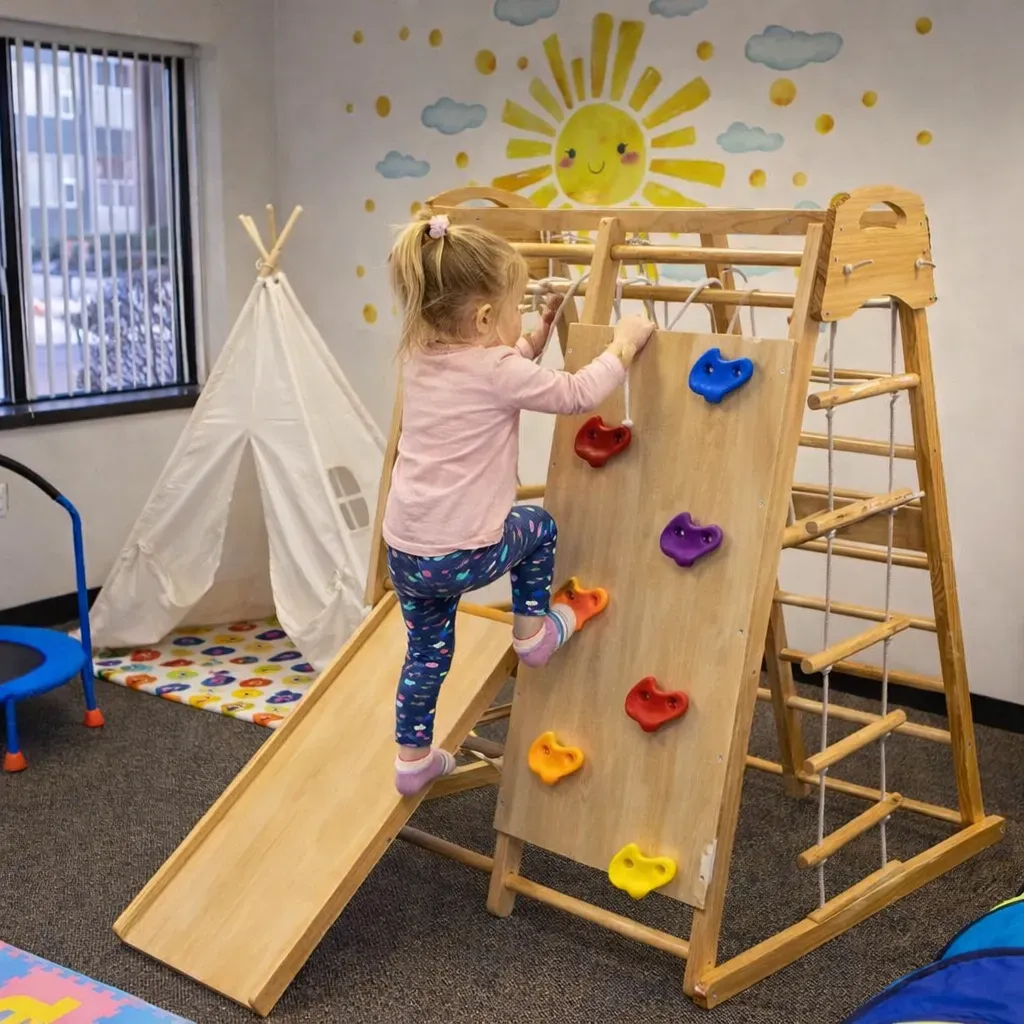
A: Ask for a tour and observe the physical space. Does it look like a place a 2- or 3-year-old would want to be? Are there open play areas, soft flooring, colorful learning stations? Ask the staff: “What does a good session look like for a child who is having a hard day?” A center that centers the child’s emotional state in their answer — rather than just behavioral outcomes — is usually the real deal.
Q: What if my child makes progress and then seems to plateau?
A: This is completely normal and a quality center should anticipate it. Plateaus happen when a child has mastered one set of skills and needs the program updated to match where they are now. A data-driven ABA program catches this quickly because the numbers show it before the parent even notices. When you’re evaluating centers, ask how often treatment plans are reviewed and updated.
Conclusion: Trust Your Instincts, But Know What to Ask
Finding the right ABA therapy center for your child isn’t just about credentials and insurance — it’s about finding a place where your child will genuinely thrive and where you, as a caregiver, will feel like a true partner in their growth. The questions in this guide exist to help you cut through the noise and identify the centers that will deliver real results for real families.
Families throughout Woburn, Winchester, Burlington, Stoneham, Wilmington, Lexington, Arlington, and Andover deserve access to ABA services that are warm, individualized, and built around their child’s actual life — not just a clinical checklist. The right center will welcome every question you have and give you honest answers before you ever sign anything.
If you’re ready to take the next step, reach out and start the conversation. First Steps Developmental Services offers a free 30-minute parent support call to help you understand your child, talk through challenges, and figure out next steps — no pressure to start services
Phone: (781) 460-9756
Address: 18 Commerce Way, Suite 1500, Woburn, MA 01801
Working Hours: Monday–Friday, contact the center for current session hours
About the Author
Jarrod Scalzo, MSEd, BCBA, LABA, is the Founder and CEO of First Steps Developmental Services, an ABA therapy center dedicated to supporting young children with autism, Down syndrome, and developmental delays, along with the families who care for them. With over 20 years of experience in special education and Applied Behavior Analysis, Jarrod earned his Master’s degree in Severe Special Needs Education from Simmons University in 2009 and became a Board Certified Behavior Analyst in 2014. He founded First Steps Developmental Services with a mission grounded in his own experience as a parent: to give every family the tools, knowledge, and compassionate support they need to help their child build a strong foundation for lifelong success. His approach centers on evidence-based care, caregiver partnership, and creating environments where children feel safe enough to grow.