
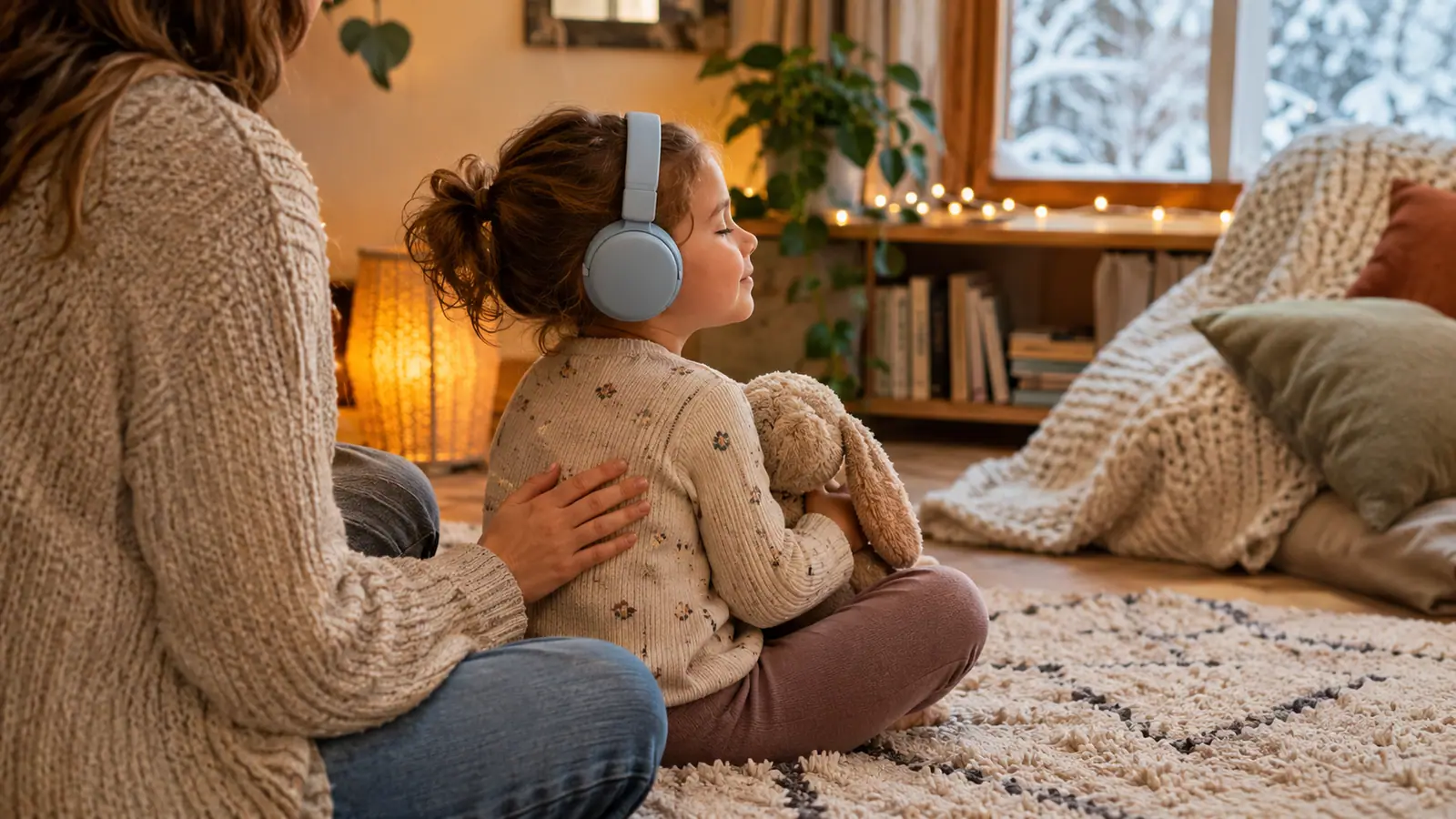
The tears at the dinner table, the meltdown in the store line, the child who suddenly will not let go of your leg: these are often signs of a nervous system that has taken in more than it can sort out. Holiday overstimulation in children is common, and it can hit harder for children with autism or Down syndrome, who may process sights, sounds and touch differently. The good news is that a little planning before and during the season can head off many of the hardest moments. For children who need more structured help with big feelings year-round, emotional regulation ABA therapy teaches calming skills step by step.
Signs of Holiday Overstimulation in Children
Overstimulation rarely looks the same from one child to the next. Some children get louder and faster. Others go quiet and pull away. Watch for patterns like these:
- Irritability, whining or crying over small things
- Meltdowns that seem to come out of nowhere
- Clinging to a parent or hiding behind furniture
- Running, jumping, spinning or crashing into people
- Covering ears or eyes, or refusing to enter a room
- Complaints of a stomachache or headache
- Trouble falling asleep after a busy day
These signs tend to build. A child who is fidgety at 3 p.m. may be in full meltdown by 5 p.m. if nothing changes.
Overstimulated or Misbehaving? How to Tell
An overstimulated child is not trying to be difficult. Their body is reacting to too much input, and the brain can treat that overload like a threat. That sets off a fight, flight or freeze response: some children lash out, some bolt, and some shut down completely.
A few clues point to overload rather than defiance. The behavior gets worse in noisy or crowded spaces, it eases once the child is somewhere quiet, and consequences or reasoning do not help in the moment. Behavior always tells you something, and learning about the functions of behavior can help you see whether a reaction is your child's way of escaping too much noise, light or attention.
Holiday Sensory Triggers, Sense by Sense
Thinking through the season one sense at a time makes triggers easier to spot and plan around:
- Sight: flashing lights, crowded rooms, piles of wrapping paper
- Sound: music, overlapping conversations, toys that beep, a TV playing in the background
- Touch: scratchy sweaters, tight dress clothes, hugs and kisses from relatives
- Smell: candles, perfume, cooking smells from an unfamiliar kitchen
- Taste: new foods at the table and pressure to try them
If your child already avoids certain textures or sounds, expect those to be the first to tip them over. The CDC's Autism Spectrum Disorder pages list unusual reactions to the way things sound, smell, taste, look or feel among the signs of autism, which is why holiday settings can feel especially intense for autistic children.
Keeping Routines Steady Over Winter Break
Young children lean on predictability. When school or therapy pauses, naps get skipped and dinner moves to 8 p.m., the buffer that helps them cope gets thinner. You do not need a perfect schedule, but a few anchors help:
- Keep wake-up time and bedtime as close to normal as you can
- Protect naps for toddlers, even if it means arriving late
- Keep meals and snacks on a regular schedule
- Offer familiar foods before a big event
- Get outside and move every day, even briefly
- Leave some days with nothing planned at all
If you are hosting in Woburn or driving to relatives in Lexington, Reading or Burlington, one event per day is usually plenty for a child under age 6.
Preparing Your Child Before an Event
Preview With Pictures and Social Stories
Show photos of the people and the house you will visit. A short social story (a few simple sentences with pictures about what will happen) or a visual schedule can turn a mystery into something your child recognizes. Tell them how long you will stay, using terms they understand, such as "until after dessert."
Agree on a Break Word and an Exit Plan
Pick a simple word, sign or picture card your child can use to ask for a break. Practice it at home when everyone is calm. Decide ahead of time where breaks will happen and when you will leave, and arrive at a quieter time if you can. Some families sandwich the hard part of the day between two favorite activities.
Brief Relatives Ahead of Time
A quick call or text can prevent a lot of friction. Let family know your child may skip hugs, wear headphones, eat familiar foods or step away often, and that this is part of the plan, not rudeness.
Setting Up a Calm-Down Space Anywhere
A calm-down space is a low-input spot your child can retreat to. At home, it might be a corner with pillows, a blanket and dim light. At a relative's house, ask for a spare bedroom or bring a small kit:
- Noise-reducing headphones
- A soft or weighted blanket your child already uses
- A favorite comfort toy or fidget
- A tablet with a familiar show, if that soothes your child
Go to the space before your child is in crisis. A five-minute break at the first signs often prevents a much longer recovery later.
Resetting With Movement, Pressure and Breath
Many children settle faster with body-based tools than with words. Try a walk around the block, jumping on a cushion, or pushing against a wall. Firm, deep pressure, such as a tight bear hug if your child likes it, rolling them up like a burrito in a blanket, or a gentle squeeze of the shoulders, can be calming for some kids. Breathing games work too: pretend to smell a cookie and blow out a candle, making the breath out longer than the breath in.
Your Own Calm Is Part of the Plan
Children borrow calm from the adults around them. This is called co-regulation. When you lower your voice, slow down and breathe with your child, you give their body a model to follow. That is hard when you are juggling cooking, guests and your own nerves, so build in breaks for yourself as well, and lower the bar on what the day has to look like.
Extra Planning for Autism and Down Syndrome
Holiday overstimulation in children with autism or Down syndrome often calls for more preparation and more breaks than you would plan for other kids. Some children have fewer words to say they are overwhelmed, so a picture card or simple sign matters more. Changes in routine may be harder to recover from, and a child may need a quieter day after a big gathering. Families in Stoneham, Winchester and nearby communities who work with an ABA team can ask their child's clinicians for help practicing break requests and calming routines before the season starts. At First Steps Developmental Services, a BCBA-owned and operated center, that support is built around each child's comfort and pace.
Questions Parents Ask About Holiday Overload
Is holiday overstimulation in children normal?
Yes, many young children struggle with the noise, crowds and schedule changes of the season. It tends to be more intense for children who already react strongly to sounds, lights or textures, including many children with autism and some children with Down syndrome. If meltdowns are frequent all year, not only during the holidays, it is worth talking with your child's pediatrician or care team.
What should I do when I feel overstimulated by my kids?
Take a short break if another adult can step in, even for a few minutes in a quiet room. Slow breathing, a glass of water and lowering the noise around you can help your body settle. Your calm helps your child calm down, so caring for yourself is part of caring for them.
Should we skip holiday gatherings altogether?
Not necessarily. Many families do well with shorter visits, arriving at a quieter time and having a clear break plan. If a particular event has gone badly year after year, it is okay to try a smaller version or a different tradition that fits your child.
Holiday overstimulation in children is easier to manage when you know your child's triggers, keep a few routines steady and plan breaks before they are needed. With some preparation, the season can hold more good moments for your child and for you. If your family would like guidance on helping your child handle big feelings, contact us to talk about next steps.
About the author
Jarrod Scalzo, MSEd, BCBA, LABA
Jarrod Scalzo, MSEd, BCBA, LABA, is the Founder and CEO of First Steps Developmental Services, an ABA therapy center dedicated to supporting young children with autism, Down syndrome, and developmental delays, along with the families who care for them. With over 20 years of experience in special education and Applied Behavior Analysis, Jarrod earned his Master's degree in Severe Special Needs Education from Simmons University in 2009 and became a Board Certified Behavior Analyst in 2014. He founded First Steps with a mission grounded in his own experience as a parent: to give every family the tools, knowledge, and compassionate support they need to help their child build a strong foundation for lifelong success. His approach centers on evidence-based care, caregiver partnership, and creating environments where children feel safe enough to grow.