
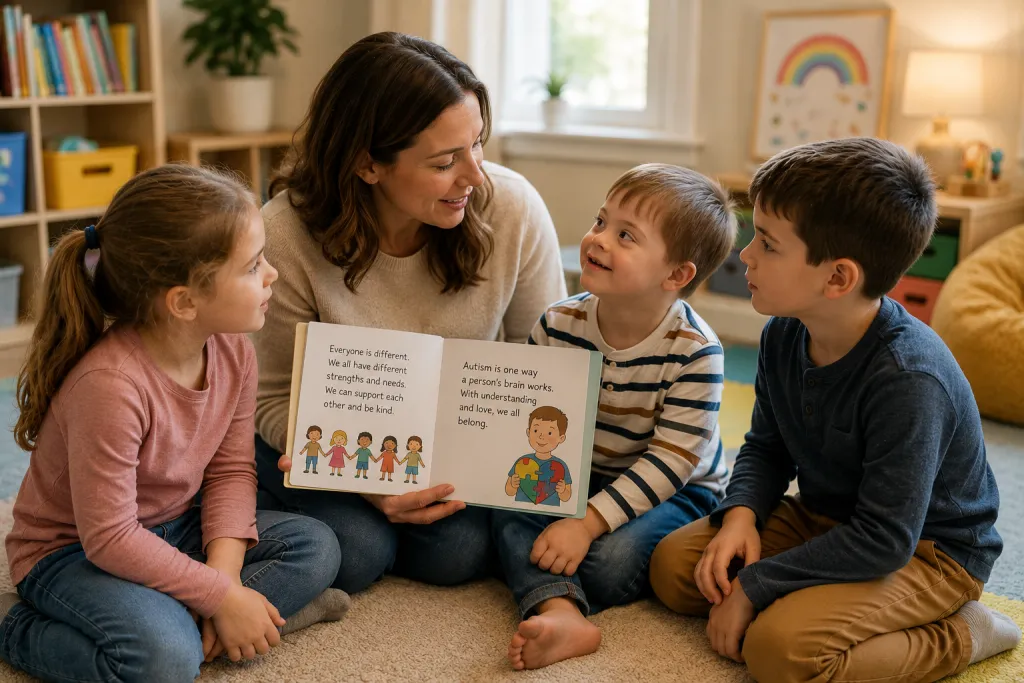
How to Explain Autism to Your Other Children
Your younger child just got an autism diagnosis, and now your older one keeps asking why their brother or sister gets to do things differently. You freeze, worried that the wrong words will scare them or push them away. Learning how to explain autism to kids in a way that fits their age is one of the most loving things you can do for the whole family, and caregiver coaching for families can make those conversations feel far less daunting. The good news is that you do not need perfect words, just honest, warm ones repeated over time.
Why the Sibling Conversation Matters So Much
When children between the ages of two and six are left to figure out a sibling’s autism on their own, they tend to fill the gaps with worry. A four-year-old may decide their brother is ignoring them on purpose. A six-year-old may feel embarrassed and not know why. Talking to kids about autism early gives them a kinder story to hold onto, one built on understanding instead of confusion.
Families across Woburn, Winchester, and Burlington tell us the same thing: the sibling relationship sets the emotional tone of the entire home. When the older child understands what is happening, the whole house tends to feel calmer.
Start With Simple Words That Actually Land
Skip the clinical language. Words like disorder or symptoms can make a young child feel like something is wrong with their sibling. Instead, frame autism as a difference in how someone’s brain works. You might say that your child’s brain is wired to notice the world in its own special way, which is why they play, talk, or feel things a little differently.
Reassure your other child that autism is not something they can catch, and it is no one’s fault. That single sentence removes a surprising amount of quiet fear.
Matching Your Words to Your Child's Age
How you explain autism to siblings depends a great deal on how old they are. The same message needs a different shape for a toddler than it does for a child starting kindergarten.
For Toddlers and Preschoolers (Ages 2 to 4)
Keep it concrete and short. Point to something they can see: their sibling likes quiet, or needs extra time to answer, or feels happiest with the same routine each day. Picture books and simple stories help children this young far more than explanations do.
For Early School-Age Siblings (Ages 5 to 6)
Children this age can handle a little more detail. You can gently explain how autism affects communication, play, and big feelings. This is a good moment to introduce ideas like sensory sensitivity and why routines bring comfort. Reliable, family-friendly information from the Centers for Disease Control and Prevention (CDC) can help you feel grounded before these conversations, so you are answering from a place of calm rather than guesswork.
Naming Feelings Without Making Anyone the Problem
Your older child may feel jealous, lonely, or frustrated, and those feelings are completely normal. Let them know it is okay to feel that way. When a sibling hears that their emotions are allowed, they stop bottling things up and start talking instead.
One parent in Wilmington shared that her daughter felt invisible until they simply named it out loud together. Saying you matter too, and I see you can change everything for a child who feels overshadowed.
Keeping the Conversation Going Over Time
This is not a one-time talk. Children understand more as they grow, so the conversation should grow with them. A question that comes up at age four will look completely different at age six, and that is exactly how it should be.
First Steps Developmental Services takes a modern, ethical approach to ABA and leads with compassion, which means we support the whole family, not only the child in therapy. Parents in Lexington, Arlington, Andover, and Stoneham work with our team to keep these sibling conversations warm, consistent, and right for each child’s age.
Helping Siblings Feel Seen Too
Try to carve out small pockets of one-on-one time with your other child, even ten minutes of undivided attention. Invite them to be a gentle helper rather than a caretaker, by showing them how to share a favorite toy or how to play in a way their sibling enjoys. These small moments build the kind of bond that lasts well beyond childhood.
Common Questions Parents Ask Us
Will explaining autism make my child scared of their sibling?
Quite the opposite. Children are far more frightened by what they do not understand. A warm, honest explanation usually brings relief, not fear, because it finally answers the questions they have been holding inside.
My child is only three. Are they too young for this talk?
Not at all. You simply keep it tiny and concrete at this age. A single sentence about how their sibling likes things calm and quiet is plenty for a three-year-old to begin with.
What if I say the wrong thing?
There is no perfect script, and you do not have to get it right alone. What matters most is that your child feels safe asking questions. If you want support tailoring the words to your family, that is exactly what coaching is for.
Building a Closer Family, One Talk at a Time
Knowing how to explain autism to kids is really about giving your children the chance to understand and love each other more fully. With gentle, age-right words repeated over time, the sibling who once felt confused can grow into a patient, proud ally for their brother or sister.
You do not have to navigate these conversations by yourself. Our team supports families with children ages zero to six across Woburn and the surrounding communities, helping you find the right words for your family at every stage. When you are ready, start the conversation with First Steps Developmental Services.
Meet the Founder of First Steps Developmental Services
Jarrod Scalzo, MSEd, BCBA, LABA, is the Founder and CEO of First Steps Developmental Services, an ABA therapy center dedicated to supporting young children with autism, Down syndrome, and developmental delays, along with the families who care for them. With over 20 years of experience in special education and Applied Behavior Analysis, Jarrod earned his Master’s degree in Severe Special Needs Education from Simmons University in 2009 and became a Board Certified Behavior Analyst in 2014. He founded First Steps Developmental Services with a mission grounded in his own experience as a parent: to give every family the tools, knowledge, and compassionate support they need to help their child build a strong foundation for lifelong success. His approach centers on evidence-based care, caregiver partnership, and creating environments where children feel safe enough to grow.